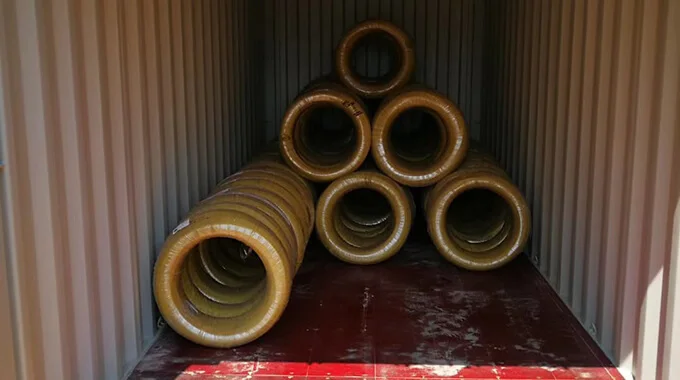
Technical data for 28B2 cold-drawn steel wire, with EN 10263-4 as the applicable standard. View the chemical composition, mechanical properties, and related technical requirements for the current grade.
Only data directly related to this material is shown here. Inspection, equipment, process and packaging information is linked separately.
1. Combinations of delivery conditions
Table 1 Combinations of delivery conditions, product shapes, and conformity requirements
Table 2 Surface quality in delivery condition
Oberflächenbeschaffenheit im Lieferzustand
Symbol
Bar
Rolled wire
Wire
Falls nicht anders vereinbart
hot-rolled
none or +AR
X
X
-
Besonderer Oberflachenzustand,der nach Vereinbarung geliefert wird
cold-drawn
+C
-
-
X
after-drawn
+LC
X
-
X
rolled peeled
+PE
X
X
X
2. Chemical composition
Table 3 Chemical composition of non-boron steel grades, cast analysis, mass fraction (%)
Table 4 Chemical composition of boron-alloyed steels. Cast analysis, mass fraction %
Steel grade
C
Si a
Mn
P max.
S max.
Cr b
Mo
Cu max.
B
Abbreviated name
Material number
28B2
1.5510
0.25 to 0.30
≤0,30
0.60 to 0.90
0,025
0,025
≤0,30
0,25
0.0008 to 0.005
a As long as a maximum chromium mass fraction of 0,30 %is specified, a minimum value may also be set at the time of inquiry and order b To achieve core hardening for steel grade 1.5408, a minimum chromium content of 0.159%may be agreed upon during the inquiry and ordering process. For certain applications, the upper limit for chromium may be lowered by mutual agreement at the time of inquiry and order.
NOTE 1 Elements not listed in this table should not be intentionally added to the steel—except for final refining of the melt—without the buyer’s consent. All precautions must be taken to prevent the introduction of such elements from scrap and other materials used in production that could adversely affect hardenability, mechanical properties, and service performance.
NOTE 2
For steels with hardenability requirements (see Tables 9 to 11), ([with the exception of sulfur and phosphorus) minor deviations from the
specified limits are permissible, provided that they do not exceed 0,01 %for carbon and the values given in Table 5 for the other elements. NOTE 3 To improve the efficiency of cold forging, it is possible to add 0.020 %to 0.050 %of aluminum.
Table 5 Permissible deviations between product analysis and the cast analysis limits specified in Tables 3 and 4
3. Mechanical properties
Table 8 Mechanical properties of boron-alloyed steels
Steel grade
Diameter
Delivery condition
+U or +PE
+AC or +AC+PE
+U+C
+U+C+AC
+U+C+AC+LC
+AC+C
Abbreviated name
Material number
Over mm
bis mm
Rm Max MPa
Z Min %
Rm max. MPa
Z min. %
Rm Max MPa
Z Min %
Rm max. MPa
Z min. %
Rm max. MPa
Z % min
Rm max. MPa
Z min. %
28B2
1.5510
2 5 10
5 10 25
630 630
60 60
520 520
64 64
720 710
55 55
510 500 500
66 66 66
550 540 540
64 64 64
610 600
59 59
4. Hardenability requirements
Table 11 Hardness limits for boron-alloyed steels with (normal) hardenability requirements (H grade; see 6.4.1)
Steel short name
rte material number
symbol
austenitizing temperature °C ± 5℃
Range limit
hardenability in HRC, distance from the quenched end face in mm
1,5
3
5
7
9
11
13
15
20
25
30
35
40
45
50
28B2
1.5510
+H
880
max
53
51
51
49
45 39
29
24
20
min.
46
42
39
23
min
48
48
47
47
45 45
41
39
31
27
25
Table 12 Maximum diameter to achieve at least 90% martensite in core hardness testing (+ CH variety)
Steel grade
Symbol
austenitizing temperature in the core hardness test °C ± 5℃
maximum diameter to ensure 90% martensite in the core [mm]
Abbreviated name
Material number
17B2 23B2 28B2 33B2 38B2
1.5502 1.5508 1.5510 1.5514 1.5515
+CH +CH +CH +CH +CH
900 890 880 870 860
37 40 43 45 48
9 9 10 11 11
a As a guideline, an austenitizing time of at least 30 minutes is recommended. b The specified maximum diameters are those achievable with the lowest hardenability for the respective steel grade, given the minimum carbon content. When using +HH steel grades, the maximum diameter may be increased
TECHNICAL NOTE
Application and ordering note
Chemical composition, mechanical properties, tolerances and delivery condition must be confirmed against the applicable standard edition, customer drawing and order specification.